Building a Backyard Adventure on a Shoestring Budget

Many parents assume that a high-quality outdoor play space requires a massive investment in high-end, plastic modular structures or expensive wooden climbing gyms. That's just not true. This post breaks down how to build a stimulating, developmentally appropriate backyard-based play environment using reclaimed materials, natural elements, and low-cost items. We'll look at how to stimulate sensory development and gross motor skills without breaking the bank.
How Can I Create a Sensory Play Area for Cheap?
You can create a high-impact sensory area by focusing on natural textures and recycled materials rather than buying new, branded sensory kits. Sensory play isn't just about "messy play"—it's about how a child's nervous system processes the world around them.
Instead of a dedicated sensory table from a high-end toy brand, look for a sturdy wooden crate or even an old plastic storage bin from a place like IKEA. Fill it with things that don't cost much. Sand, water, dried beans, or even smooth river stones from your local hardware store work perfectly. If you want to get a bit more adventurous, a "mud kitchen" is a classic for a reason. It doesn't need to be a professional-grade set. A couple of old metal pots, some spoons, and a bit of dirt will keep a four-year-old occupied for an hour—or three.
The key is variety. You want different temperatures, weights, and textures. A child might find a cold, wet stone much more interesting than a dry, plastic ball. It's about that tactile feedback. (And honestly, a little dirt never hurt anyone—it's part of the learning process.)
If you're worried about the mess, don't be. Setting up a designated "wet zone" with a simple tarp or a few old outdoor rugs can actually make the cleanup easier. It also helps set boundaries for where the "messy" play is allowed to happen.
What Are the Best Low-Cost Outdoor Play Structures?
The most effective outdoor play structures are often the simplest ones, like tire swings, climbing logs, or even a basic sandbox.
You don't need a $2,000 climbing set to build strength and coordination. In fact, many children find more joy in "loose parts" play than in a fixed structure. Loose parts are materials that can be moved, carried, lifted, and easily carried away. They encourage much more creativity than a static swing set. Here is a quick comparison of common low-cost options versus traditional high-cost play equipment:
| Play Type | Low-Cost/Natural Option | High-Cost/Store-Bought Option | Developmental Benefit |
|---|---|---|---|
| Climbing | A fallen log or large rocks | Metal climbing frame | Proprioception & Balance |
| Movement | Old tire swing (from a garage sale) | High-end playground swing set | Vestibular Stimulation |
| Creativity | Loose parts (sticks, stones, crates) | Themed play sets (castles, etc.) | Problem Solving & Imagination |
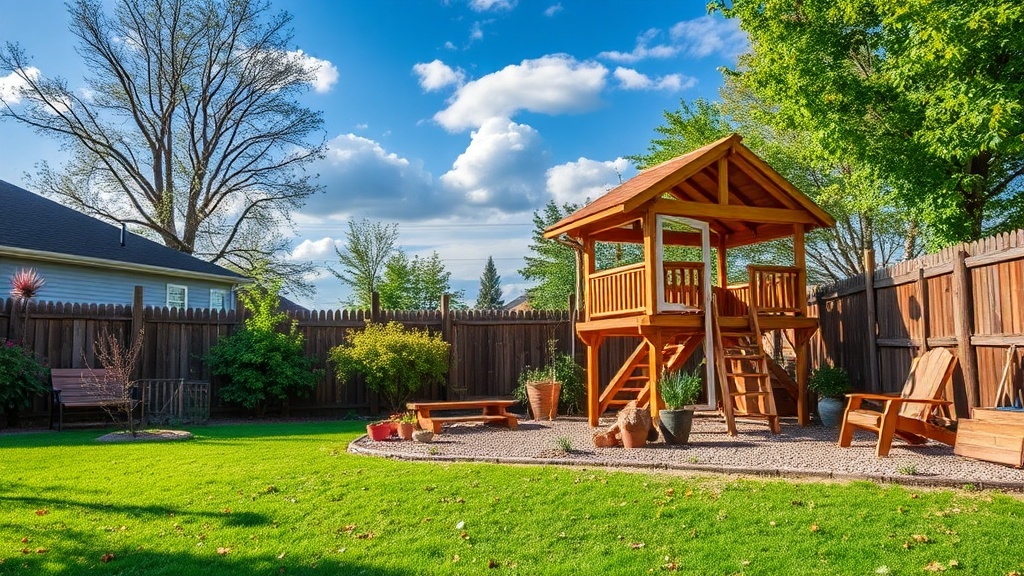
If you're looking for something slightly more permanent, check out local classifieds or Facebook Marketplace. You'll often find people giving away old wooden playhouses or even basic sandboxes. A simple wooden pallet can be turned into a vertical garden or a wall for hanging art, which provides a different kind of tactile engagement. It's about the process of play, not the product you bought.
When you're building these spaces, remember that safety is still a factor. Even if it's a "junk" pile of wood, make sure there are no sharp edges or rusted nails. You can check out the U.S. Consumer Product Safety Commission for general guidelines on playground safety, even for home setups.
Encouraging Independent Play Through Nature
One of the biggest wins of a backyard setup is how it facilitates independent play. When a child is given a pile of sticks and some mud, they aren't just "playing"—they're deciding how to use those tools. They're testing gravity, weight, and friction. This builds a level of confidence that a structured, "follow-the-rules" toy simply can't provide.
I've noticed that when I give my kids a specific "mission"—like "find three different shaped leaves"—they stay engaged much longer than if I just hand them a toy. It's that sense of agency. They are the architects of their own adventure.
How Much Does a Backyard Play Space Cost to Build?
A functional, engaging outdoor play space can be built for under $50 if you are willing to be resourceful and use recycled materials.
Most of the "equipment" I use is essentially free. If you have a backyard, you already have the most important part. You can find many of the items needed for a great setup at thrift stores or even in your own recycling bin. A few cardboard boxes can become a fort, a tunnel, or a spaceship. It sounds simple, but to a toddler, a large refrigerator box is a massive engineering project.
Here is a breakdown of where to spend your money versus where to save:
- Spend on: Safety-conscious items like a good quality outdoor rug or a sturdy, weather-resistant bin for storage.
- Save on: "Themed" toys. You don't need the "Adventure Explorer Kit" from a big-box retailer. A magnifying glass and an old jar will do the exact same thing.
- Save on: Climbing structures. A sturdy tree limb or a pile of large, flat stones is much more interesting than a plastic climbing wall.
- Spend on: High-quality art supplies that can handle the outdoors, like thick tempera paints or heavy-duty paper.
The goal isn't to have the "best" backyard on the block. The goal is to have a space that invites curiosity. If your child is busy trying to balance on a log or build a dam in a puddle, you've succeeded. You've provided a space for cognitive and physical development without needing a massive budget.
Don't feel guilty if your backyard looks a bit "messy" or unpolished. A perfectly manicured lawn is much less interesting to a child than a corner with some dirt, some stones, and a few interesting branches. The "mess" is actually the evidence of a working brain. It's a sign of active, engaged learning.
If you find yourself struggling with the transition from indoor to outdoor play—especially if your child is prone to frustration when it's time to come back inside—you might want to look into navigating toddler meltdowns. Often, the end of a great outdoor adventure can trigger a bit of a struggle, and having a plan can help.
The beauty of the backyard is that it's a living, breathing playground. It changes with the seasons, the weather, and the time of day. One day it's a dry, dusty construction site; the next, it's a muddy, slippery obstacle course. That variability is what keeps them coming back. It keeps their brains on their toes.