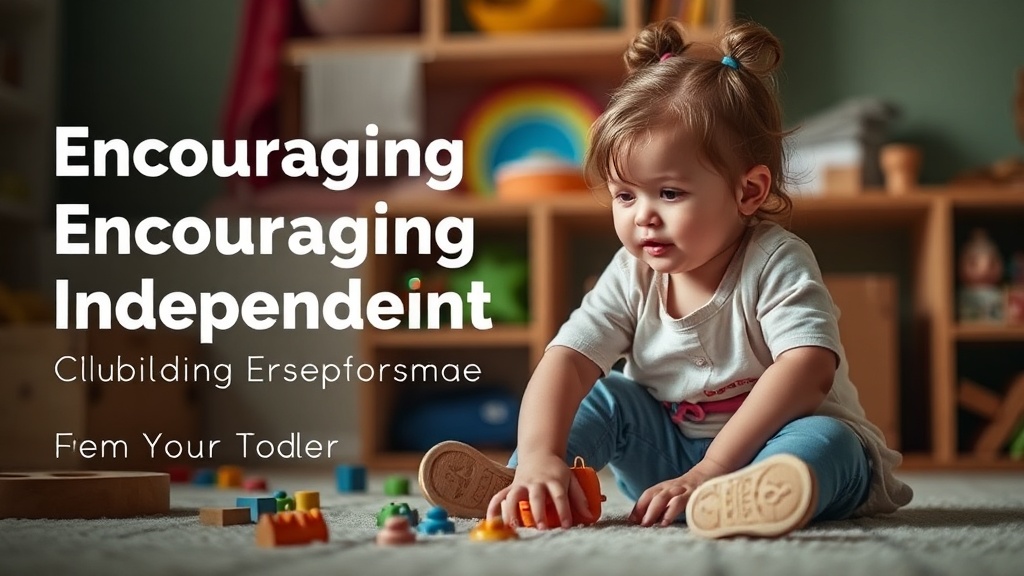
Encouraging Independent Play: Building Confidence in Your Toddler

This guide covers practical strategies for encouraging toddlers to play independently, including age-appropriate activities, setting up the right environment, and handling the common challenges parents face. Independent play isn't just about keeping a child occupied—it's a foundation for problem-solving skills, creativity, and self-confidence that lasts well beyond the early years. Parents who understand how to support this development often find daily routines become smoother and their toddlers more resilient.
Why is independent play important for toddler development?
Independent play builds critical neural pathways and emotional resilience in ways that structured activities simply can't replicate. When a toddler figures out how to stack blocks without help or creates a story with stuffed animals, they're practicing executive function skills. That said, many parents worry they're being neglectful by not engaging constantly. The opposite is true—hovering can actually inhibit a child's ability to develop self-regulation and creative thinking.
Research from the ZERO TO THREE organization shows that children who engage in regular independent play demonstrate better attention spans and emotional regulation by preschool age. The brain needs unstructured time to process experiences, experiment with cause and effect, and develop what psychologists call "self-efficacy"—the belief that one can handle challenges independently.
Worth noting: independent play looks different at various stages. A 12-month-old might focus for 2-3 minutes, while a 3-year-old can often sustain 15-20 minutes of solo activity. The goal isn't marathon sessions—it's building the capacity gradually.
How do you set up a space that encourages independent play?
The environment shapes behavior more than most parents realize. A thoughtfully arranged play area removes friction and invites exploration without constant adult intervention. Here's the thing—this doesn't require a dedicated playroom or expensive furniture. A corner of the living room with a low shelf and a washable rug works perfectly well.
Consider the "prepared environment" principles from Montessori education. Toys should be visible, accessible, and limited in number. The IKEA KALLAX shelving unit (with the 2x2 or 2x4 configuration) works beautifully for this—low enough for toddlers to reach, with bins that corral toys by category. Rotate materials every 1-2 weeks to maintain interest without overwhelming the child with choices.
Key Elements of an Independent Play Space
| Element | Why It Matters | Specific Recommendations |
|---|---|---|
| Low, open shelving | Children can see and select materials independently | Montessori-inspired wooden shelves, IKEA TROFAST system |
| Defined zones | Creates mental boundaries for different activities | Reading nook with Pillows for Little Readers cushion, art corner with Melissa & Doug easel |
| Child-sized furniture | Builds physical confidence and autonomy | ECR4Kids plastic table and chair set, Step2 kitchen helper stool |
| Natural lighting | Improves mood and focus | Position near windows; add blackout curtains for nap transitions |
| Sensory elements | Engages multiple learning pathways | Water beads in a Sensory Bin, kinetic sand in a sealed container |
Safety matters, obviously. Gate off areas with hazards, secure furniture to walls, and install outlet covers. But resist the urge to childproof every possible inconvenience—the occasional bump or frustration teaches problem-solving. The catch? You need to strike a balance between safe and sterile. A space that's too controlled removes opportunities for learning.
What activities work best for independent play at different ages?
Matching activities to developmental stages prevents frustration and builds success. Younger toddlers (12-24 months) typically engage best with cause-and-effect toys and simple manipulatives. Older toddlers (2-3 years) can handle more complex imaginative play and construction activities.
For the 12-18 month range, consider the Lovevery Play Kits—the "Babbler" kit (months 13-15) includes the Sliding Top Box and First Puzzle, which are perfectly calibrated for emerging fine motor skills. Fat Brain Toys Squigz starter sets also work well at this stage; the suction construction pieces provide satisfying sensory feedback with minimal frustration.
By age 2, toddlers often engage with pretend play. A play kitchen (the Step2 Fun with Friends Kitchen is a durable, affordable option) can sustain independent play for 20+ minutes. Add real but safe items—wooden spoons, measuring cups, clean sponges—rather than only plastic food. The authenticity extends play.
For 2.5-3 year olds, introduce open-ended building materials. Magna-Tiles (start with the 32-piece Clear Colors set) and LEGO DUPLO (the My First Number Train is a gateway to creative building) offer endless variations. Art supplies also expand possibilities at this age—Crayola Washable Kids Paint with large brushes and heavyweight paper allows creative expression without constant supervision.
How do you handle resistance when encouraging independent play?
Resistance is normal. Most toddlers will test boundaries, especially when independent play is introduced or expanded. The parent-child attachment is primary, and separation—even for play—can feel threatening to a young child. The key is responding with empathy while maintaining boundaries.
Start with "parallel play"—being physically present but not directing the activity. Sit nearby with your own book or task, occasionally commenting on what the child is doing ("You've stacked the blue block on top"). Gradually increase physical distance over days or weeks. The Amazon Kindle Paperwhite or a physical notebook works well for this—something that genuinely holds your attention so you're not tempted to intervene.
When a toddler resists, validate the feeling without surrendering the boundary. "You want mama to play with you. It's hard when mama needs to cook dinner. I'll be right here in the kitchen." Then follow through—stay visible and available, but don't engage in the play. Consistency matters more than perfection.
Some children struggle more with transitions into independent play. Visual timers (the Time Timer MOD is excellent for this age group) help toddlers understand that play time has a defined beginning and end. Start with 5-minute sessions and build slowly. Celebrate effort, not just success: "You played with your cars while I folded laundry. That took concentration."
Common Challenges and Responses
- Constant interruption: Use a designated "question object"—a small pillow or toy the child brings when they need help. This creates a pause and often leads to self-solving.
- Short attention spans: Check for overstimulation. Too many toys or background noise (television, podcasts) fragment attention. Create a calmer environment.
- Seeking approval: Respond with observation rather than evaluation. Instead of "Good job building," try "You made that tower tall."
- Sibling interference: Establish separate play times or spaces when possible. The Regalo My Portable Play Yard creates a physical boundary that older siblings usually respect.
When should parents step in during independent play?
Knowing when to intervene—and when to hold back—is more art than science. Safety issues require immediate response. Social conflicts with siblings or peers may need mediation. But the urge to "fix" minor frustrations or "teach" the "right" way to play usually serves parental anxiety more than child development.
The American Academy of Pediatrics offers guidance through HealthyChildren.org on supporting toddler autonomy without abandoning them to struggle alone. The general principle: intervene when the child is truly stuck (not just working through difficulty) or when behavior becomes destructive.
Here's the thing about boredom—it's a feature, not a bug. When a toddler complains of having "nothing to do," resist the impulse to provide entertainment. Boredom sparks creativity. It forces the brain to generate novel solutions. That said, you can scaffold this by ensuring materials are available and the environment supports exploration.
Worth noting: screens change the equation significantly. The overstimulation from even "educational" apps like Khan Academy Kids or PBS Kids Video can make independent play with physical materials feel dull by comparison. The dopamine hit from digital interaction is hard to compete with. Most pediatricians recommend limiting screen time for 2-3 year olds to 1 hour daily of high-quality programming—and never using screens as a background distraction.
Building independent play capacity takes weeks, sometimes months. There will be setbacks during illness, travel, or developmental leaps. The goal isn't independence for its own sake—it's building a child who trusts their own capabilities, who knows that challenges can be met with patience and creativity. That foundation serves them far beyond the toddler years.