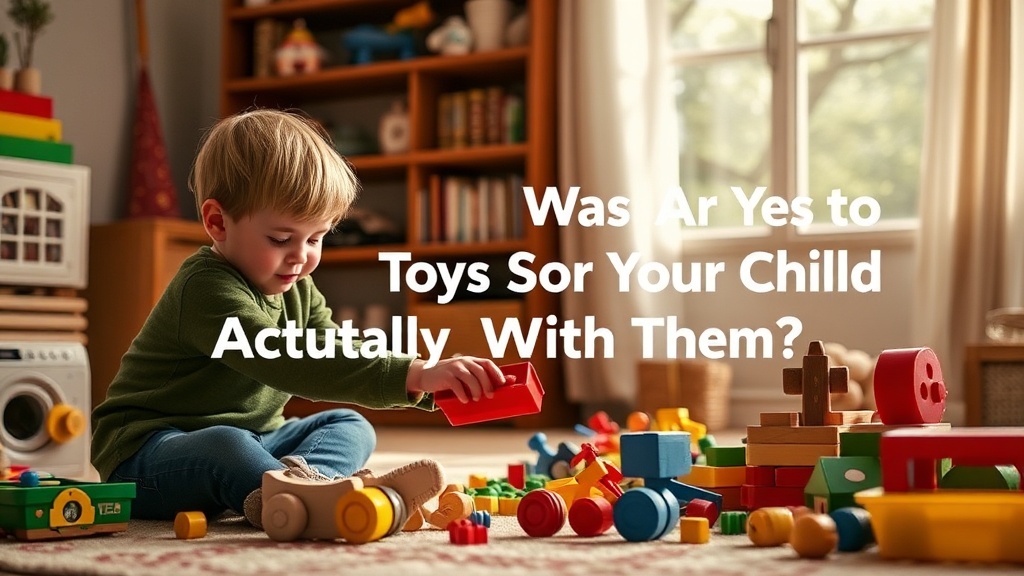
What Are the Best Ways to Rotate Toys So Your Child Actually Plays With Them?

Your living room looks like a toy store exploded—again. Blocks scattered across the rug, stuffed animals spilling from baskets, puzzles with missing pieces shoved in corners. You've bought the "right" toys, the ones all the parenting blogs recommend, yet your child seems bored after five minutes. Here's what you'll learn in this guide: why fewer toys lead to deeper, more creative play; how to set up a simple rotation system that takes under ten minutes a week; and practical strategies for storing, selecting, and reintroducing toys so your child stays engaged without you constantly buying new things.
Why Does Having Too Many Toys Backfire?
It seems counterintuitive—more toys should mean more fun, right? Research from the University of Toledo tells a different story. In a study published in Infant Behavior and Development, toddlers who had access to fewer toys played longer and more creatively than those surrounded by sixteen options. The reason is simple: too much choice overwhelms young brains. When everything is available, nothing feels special.
Children under five are still developing their executive function skills—that's the mental machinery for focusing, switching tasks, and making decisions. A cluttered play environment taxes these developing systems. You might notice your child flitting from toy to toy, picking something up for thirty seconds before abandoning it for the next shiny object. This isn't bad behavior; it's a neurological response to overstimulation. When the brain can't categorize and prioritize inputs, it defaults to shallow engagement.
There's another hidden cost to toy abundance: children don't learn to sustain attention. Deep play—the kind where a toddler builds an elaborate block tower, knocks it down, rebuilds it differently, and narrates an entire story around it—requires uninterrupted time and mental space. That depth can't happen when twenty other toys are crying out for attention from the shelf. By rotating toys, you're not restricting your child; you're giving them the gift of focus.
How Do You Decide Which Toys to Rotate Out?
Start with a complete inventory. Yes, every single toy. Spread them across your floor and sort into categories: building toys (blocks, magnetic tiles), pretend play (dress-up clothes, play food), manipulatives (puzzles, sorting games), active play (balls, ride-ons), and creative materials (art supplies, playdough). You'll likely find duplicates, broken items, and things your child has outgrown. Remove the broken ones immediately—nobody needs that frustration.
Now comes the selection process. Keep out twelve to fifteen toys maximum for children under four; older preschoolers can handle twenty to twenty-five. Choose a variety that hits different developmental areas: something for fine motor skills, something for gross motor movement, something for imaginative play, and something for problem-solving. The goal isn't to cover every base every week—it's to create a balanced "menu" that supports different kinds of thinking and moving.
What goes into storage? Anything your child hasn't touched in two weeks (unless it's a beloved comfort item—those stay). Anything they're currently struggling with developmentally—if the twelve-piece puzzle is causing tears, put it away and bring out the six-piece version instead. Anything that's seasonally inappropriate—beach toys in December, indoor crafting kits during prime outdoor weather. Store these in opaque bins, bags, or boxes. Out of sight truly is out of mind for young children, and the "disappearance" makes the eventual reappearance exciting.
What's the Simplest Rotation System That Actually Works?
Fancy organizational systems fail because they're too complicated to maintain. You need something you can execute while drinking cold coffee and supervising breakfast. The "Sunday Swap" method works for thousands of families: every Sunday evening (or whatever day works), after your child is asleep, you trade out one-third of the current toys for items from storage. That's it. No elaborate tracking spreadsheets, no color-coded calendars.
Some parents prefer a thematic approach—"this week is dinosaurs and construction" or "we're exploring water play and music." This works beautifully if you enjoy planning and your child responds well to focused exploration. Others prefer random rotation, letting chance determine what rediscovered treasure appears. Both approaches are valid; what matters is consistency. Children thrive on predictable rhythms, and a weekly rotation becomes something they anticipate. You might hear "What did the toy fairy bring?" on Monday mornings—a sign that the system has become family culture rather than parental chore.
The reintroduction phase is where the magic happens. When a "new" toy appears after several weeks away, your child engages with it at a higher level than before. The toddler who previously just banged the xylophone keys now notices the different pitches. The three-year-old who stacked blocks randomly now builds symmetrical towers. This isn't because the toy changed—it's because your child's brain developed during the break. Rotation creates natural opportunities for children to demonstrate and consolidate new skills. For more on supporting developmental milestones through play, see Zero to Three's resources on play and development.
How Do You Handle the Emotional Side of Toy Rotation?
Your child will notice. They'll ask where the blue truck went or why the dollhouse disappeared. This is actually a teaching moment about object permanence, trust, and emotional regulation. Explain clearly: "The blue truck is taking a rest in the closet. It will come back another day." Young children accept this logic more readily than you'd expect—especially if you establish the rotation routine early and stick to it.
Tears might happen anyway. Validate the feelings without abandoning the system: "You really miss the truck. It's okay to feel sad about that." Then redirect to the "new" available options. Most disappointment fades within minutes as curiosity about fresh materials takes over. If your child consistently asks for a specific stored item, that's valuable feedback—it might need to stay in rotation longer, or it might be a transitional object requiring special status.
Extended family can complicate toy rotation. Grandparents love gifting elaborate toys that don't fit your storage system or your child's current interests. Have honest conversations about your approach: "We're keeping toys simple at home—would you consider experiences instead? Zoo trips, museum passes, or special outings create memories without the clutter." Most relatives want to contribute meaningfully and will adapt once they understand your reasoning. The American Academy of Pediatrics offers helpful guidance on selecting developmentally appropriate toys that you can share with well-meaning gift-givers.
What About Books, Art Supplies, and Outdoor Toys?
Toy rotation principles extend beyond plastic playthings. Books especially benefit from rotation—display ten to fifteen at a time rather than cramming shelves with hundreds. Face the covers forward so children can see the art; spines are invisible to pre-readers. Rotate based on season, theme, or simply what you've been neglecting. A forgotten book rediscovered feels brand new.
Art supplies need different handling. Keep basic materials (paper, crayons, playdough) consistently available—they're tools for expression, not entertainment products. Rotate the special items: watercolor paints one month, sticker collages the next, bead stringing after that. This prevents creative burnout and keeps cleanup manageable. Nobody wants to supervise glitter glue on a Tuesday morning.
Outdoor toys follow the same logic. The sandbox toys, bubbles, and sidewalk chalk don't need to coexist with every indoor option. Store seasonal outdoor gear and rotate it based on weather and interest. When the bubble wands reappear after winter, the first spring afternoon becomes an event rather than routine.
Start small. Choose one shelf, one category, one week. Observe how your child responds to fewer options with deeper attention. Notice the creative combinations they invent when resources feel limited. Appreciate the calmer visual environment that lets everyone breathe easier. Toy rotation isn't about deprivation—it's about curating experiences that match your child's developing mind. The goal isn't a perfectly organized playroom; it's a child who can lose themselves in play, who builds focus and creativity and joy in the simple act of engagement.