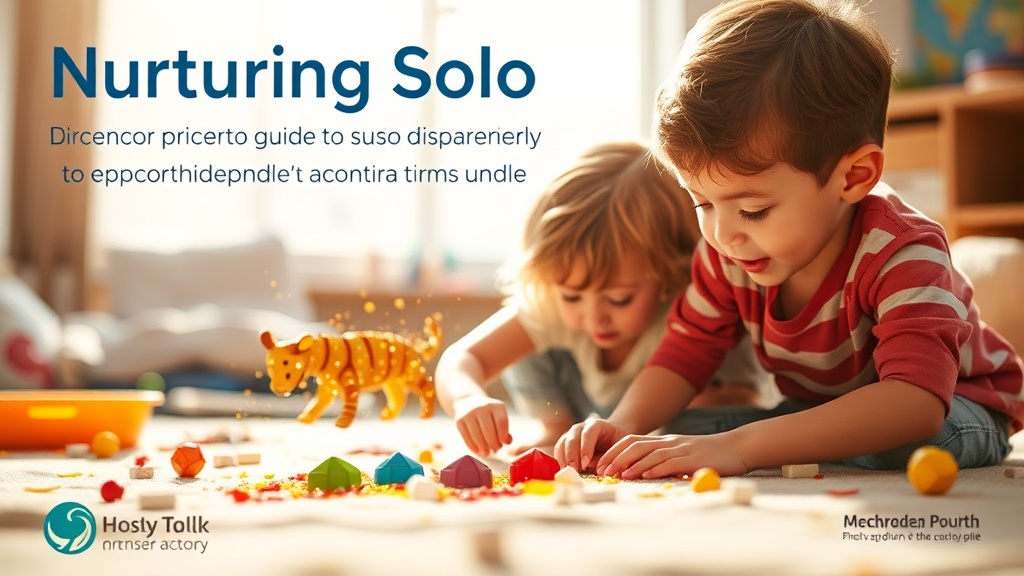
Nurturing Solo Discovery: A Guide to Empowering Independent Play in Young Children

This guide will equip you with practical strategies to encourage independent play in children from infancy through early elementary years, explaining why this skill is not just a break for parents, but a fundamental building block for a child's development. Cultivating a child’s ability to play independently lays the groundwork for creativity, problem-solving, self-regulation, and sustained attention—skills that serve them throughout their lives. When children engage in self-directed play, they learn to explore their world, test boundaries, and develop an inner drive that isn't reliant on constant external stimulation or adult direction. This process is vital for their cognitive growth, emotional intelligence, and ability to entertain themselves constructively.
What Does Independent Play Look Like at Different Ages?
Understanding age-appropriate independent play helps parents set realistic expectations and offer the right support. A baby’s solo play will differ greatly from a preschooler’s, yet each stage is equally important for skill acquisition.
Babies and Toddlers: The Foundations of Exploration
For infants, independent play often involves simple observation and interaction with their immediate environment. This might look like gazing at a mobile, batting at a toy hanging from a play gym, or exploring textures on a mat. As they grow into toddlers, their independent play evolves into more active exploration—stacking blocks, pushing toy cars, flipping through board books, or engaging in early pretend play with dolls or stuffed animals. At this age, solo play sessions might be brief, perhaps 10-15 minutes, but they are incredibly rich in learning. They’re figuring out cause and effect, developing fine and gross motor skills, and beginning to understand object permanence.
Preschoolers and Young School-Agers: Imaginative Worlds and Problem-Solving
By the preschool years, independent play blossoms into complex imaginative scenarios. Children might build intricate structures with LEGOs, create elaborate pretend worlds with action figures, or spend long stretches drawing and painting. This is where you see deep engagement in storytelling and role-playing, often with self-imposed rules and narratives. For young school-agers, independent play often includes focused activities like puzzles, intricate craft projects, reading chapter books, or even constructing elaborate forts. These longer periods of sustained attention hone their problem-solving abilities, encourage resilience when faced with challenges, and refine their fine motor control. The play becomes a child’s own laboratory for learning and self-discovery.
How Can Parents Cultivate a Space for Solo Exploration?
The physical environment and how we present play opportunities significantly influence a child’s capacity for independent engagement. It’s less about having a lot of toys and more about having the right setup.
Creating the Right Environment: Simplicity and Accessibility
Think about a dedicated play area that is safe, accessible, and not overwhelming. A cluttered space can be distracting and stifle creativity. Instead, aim for a minimalist approach where toys are visible, easily reachable, and organized. Consider open-ended toys that can be used in multiple ways—blocks, art supplies, dress-up clothes, or natural materials. These types of toys invite creativity rather than dictating play. Ensuring the space is child-proofed allows your child the freedom to explore without constant supervision or interruption for safety reasons. A simple rug, a small table, or a low shelf can define the space and make it inviting for solo endeavors. A calm, uncluttered backdrop often encourages deeper focus. For more on creating effective play spaces, the