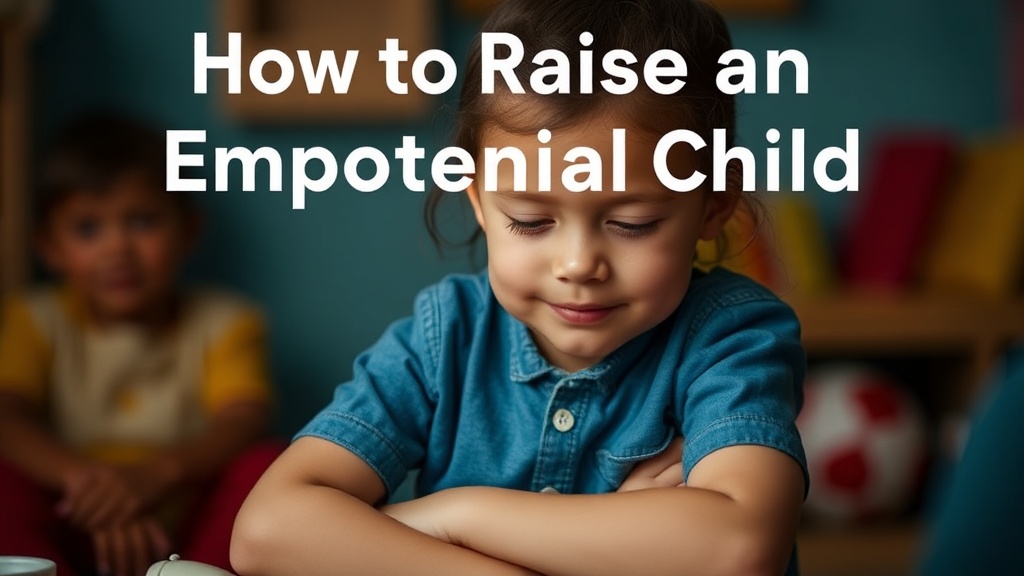
How to Raise an Empathetic Child Without Formal Lessons

Most parents believe empathy is something children either naturally possess or develop once they start school—something that happens on its own, like losing baby teeth or growing taller. But empathy isn't an inherited trait that magically appears. It's a skill built through hundreds of small interactions, observations, and conversations that happen in your home every single day. Teaching your child to recognize emotions in others and respond with kindness doesn't require special curricula, flashcards, or scheduled "empathy lessons." It happens in the grocery store when someone drops their bags. It happens when the family pet looks sad. It happens during sibling squabbles over the last cookie.
Children between two and six are in a critical window for emotional development. Their brains are wiring themselves to understand that other people have thoughts, feelings, and perspectives different from their own. This skill—called theory of mind—forms the foundation of empathy. Without it, children can't truly grasp why their actions affect others or why someone might feel differently about a situation than they do. The good news? You don't need to be a child psychologist to nurture this development. You just need to be intentional about the moments you're already sharing.
What Does Empathy Actually Look Like in Young Children?
Before you can teach empathy, you need to recognize it—and its absence—in age-appropriate ways. A two-year-old who brings you a blanket when you sneeze isn't just being cute; she's demonstrating the earliest form of empathic responding. She noticed your distress (even mild distress) and took action based on what comforts her. It's imperfect empathy, but it's empathy nonetheless.
By age four, most children can predict how someone else might feel in a simple scenario. They understand that taking a toy makes another child sad, even if they proceed to take it anyway. (Impulse control is a separate skill—don't confuse the two.) True empathic behavior—acting kindly even when it costs something—typically emerges between five and seven years old.
Watch for these developmental markers:
- Ages 2-3: Noticing emotional displays in others, sometimes offering their own comfort objects
- Ages 3-4: Labeling emotions in others ("He's mad"), showing concern when someone is hurt
- Ages 4-5: Predicting emotional reactions, offering verbal comfort, attempting to help
- Ages 5-6: Understanding complex emotions (disappointment, embarrassment), adjusting behavior based on others' feelings
If your child seems behind these markers, don't panic. Like all developmental timelines, there's wide variation. What matters is consistent, responsive interaction—not hitting arbitrary milestones.
How Can I Help My Child Recognize Emotions in Others?
Empathy starts with observation. Children can't respond to feelings they don't notice. Your job is to build their emotional vocabulary and train them to watch for cues—facial expressions, body language, tone of voice—that reveal what others are experiencing.
Start with labeling. When you're reading books together, pause on illustrations showing characters' faces. Ask: "What do you think she's feeling?" Don't correct wrong answers immediately. If your child says a character looks "mad" when they're clearly sad, ask follow-up questions. "What makes you think that? What do you notice about her mouth?" This builds observation skills rather than just teaching them to guess what you want to hear.
Real-life practice works even better. At the park, discreetly point out social situations. "See that boy on the slide? He sat down and isn't moving. What do you think might be happening?" Maybe he's scared. Maybe he's tired. Maybe he's waiting for his mom. The specific answer matters less than the habit of wondering about others' internal states.
Don't forget to label your own emotions—authentically, not performatively. "I'm feeling frustrated because I dropped the eggs. I need to take a deep breath before I clean this up." This models emotional awareness and healthy coping simultaneously. Research from the Zero to Three foundation confirms that children whose parents regularly discuss emotions develop stronger empathy skills by preschool age.
What's the Best Way to Respond When My Child Hurts Someone?
This is where many parents accidentally undermine empathy development. The forced apology—"Say you're sorry right now"—teaches compliance, not compassion. When children parrot "I'm sorry" without feeling remorse, they learn that words are tools for escaping consequences, not genuine bridges to repair relationships.
Instead, focus on the impact. Get down to your child's level. "Look at Maya's face. She's crying. When you took the truck, she felt sad." Wait. Let your child process. Then ask: "What could we do to help her feel better?" Your child might suggest returning the toy, offering a hug, or finding something else to play with. Any of these are fine. The goal is connecting their action to someone else's pain—and giving them agency in making it right.
Sometimes children resist. They'll look away, cross their arms, or insist the other child deserved it. This isn't moral failure. It's emotional self-protection. Young children have fragile self-concepts; admitting they hurt someone threatens their image of themselves as "good." Don't push harder. Simply state what you observed, express confidence in their kindness ("You're someone who cares about others' feelings"), and move on. They'll process the interaction later—and they are processing it, even when they seem dismissive.
Timeouts and harsh punishments for hurtful behavior typically backfire. They focus the child's attention on their own suffering (the punishment) rather than the suffering they caused. Natural consequences—having to stop playing because they hurt someone—are more effective teaching tools.
Can Reading Fiction Really Build Empathy?
The short answer is yes—but with important caveats. Reading literary fiction has been shown to improve adults' theory of mind. For children, the research points to high-quality picture books with complex characters and emotional narratives.
Passive reading isn't enough. The empathy-building power comes from discussion—what researchers call "dialogic reading." As you read, ask questions that require perspective-taking. "Why do you think he did that?" "What might happen next?" "Have you ever felt like this character?" These conversations help children practice stepping into someone else's shoes.
Choose books that depict diverse experiences. A child who only reads stories about children exactly like themselves won't stretch their empathic muscles. Look for books featuring characters from different backgrounds, with different abilities, facing different challenges. The Common Sense Media website offers excellent recommendations for empathy-building books sorted by age.
Don't abandon books your child loves, even if they seem "simple." Repetition builds comfort. Instead, occasionally introduce more complex stories alongside favorites. Quality matters more than quantity—a few thoughtfully discussed books outperform shelves of unread volumes.
How Do I Model Empathy When I'm Exhausted?
Here's the uncomfortable truth: your child learns empathy primarily by receiving it. When they're melting down in the grocery store and you respond with patience—recognizing they're tired, not defiant—you model emotional attunement. When you name your own feelings without blaming them—"I'm feeling overwhelmed by all this noise"—you show that emotions are manageable.
But you're human. You'll snap. You'll dismiss feelings that seem disproportionate. You'll prioritize efficiency over connection. The goal isn't perfection; it's repair. When you mishandle a situation, circle back. "I yelled earlier when you spilled the milk. I was frustrated, but that's not how I want to talk to you. I'm sorry." This models something profound: empathy includes acknowledging when we've failed to be empathic.
Self-compassion matters too. Children whose parents treat themselves harshly often internalize that same inner critic. Speak to yourself the way you'd want your child to speak to themselves when they make mistakes. They're always watching—and they miss nothing.
Practical Strategies for Everyday Moments
Beyond the big conversations, empathy lives in small habits:
- The emotion check-in: During dinner, ask everyone to share one feeling from their day and what caused it. No judgment, just listening.
- Service projects: Even toddlers can participate in age-appropriate kindness—making cards for nursing home residents, collecting items for food drives, or helping a neighbor. The key is discussing why these actions matter to others.
- Pet care: Caring for animals teaches children to recognize non-verbal emotional cues and respond to needs different from their own.
- Conflict mediation: When siblings fight, resist the urge to assign blame. Instead, help each child articulate their feelings and hear their sibling's perspective.
- Media literacy: When watching shows together, pause and discuss characters' motivations. Commercial children's programming often oversimplifies emotions; help your child dig deeper.
Empathy isn't a trait you either have or lack—it's a capacity that grows with use. Your child won't become perfectly kind overnight. There will be regression, selfishness, and moments that make you question everything. That's normal. Keep naming emotions. Keep asking about others' perspectives. Keep modeling kindness, even imperfectly.
The child who learns to wonder "How is that person feeling?" becomes the adult who asks "How can I help?" That transformation happens one small moment at a time—starting today, starting with you. For more research-backed guidance on social-emotional development, visit the Collaborative for Academic, Social, and Emotional Learning (CASEL).