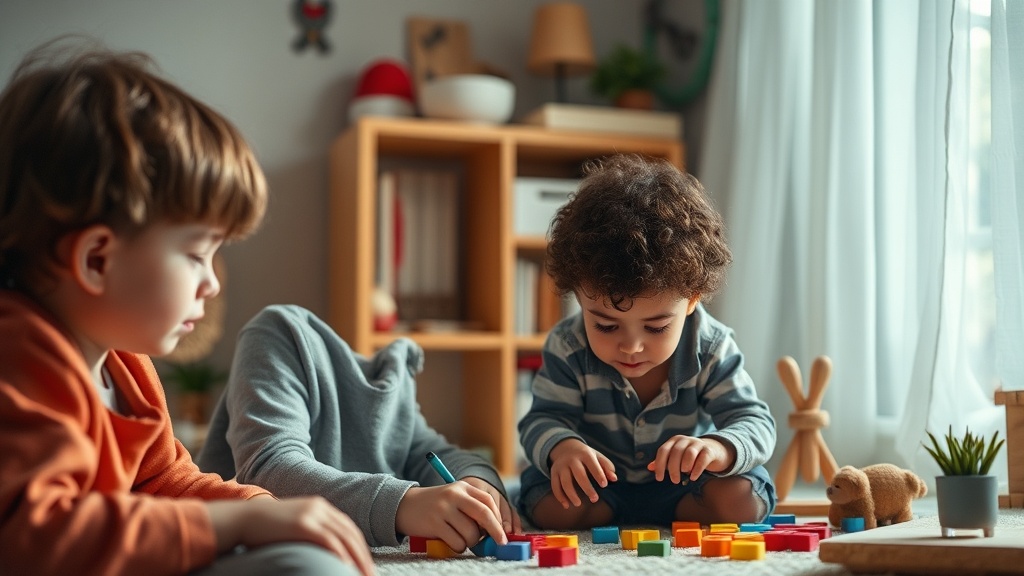
How to Create a Play-Based Learning Environment at Home

This guide breaks down exactly how to transform ordinary spaces into environments where children learn through play—no fancy equipment or Pinterest-perfect rooms required. You'll discover practical room-by-room strategies, the best open-ended toys that grow with your child, and simple daily routines that support independent exploration. Whether working with a cramped apartment or a spacious home, these principles help kids develop problem-solving skills, creativity, and confidence without forced lessons or flashcards.
What is a Play-Based Learning Environment?
A play-based learning environment is a space designed specifically for children to explore, experiment, and discover through self-directed activities. Research from the National Association for the Education of Young Children confirms that children retain more information when they're actively engaged rather than passively receiving instruction. The space itself becomes a silent teacher—arranged to invite curiosity, support independence, and reduce frustration.
Here's the thing: this doesn't mean filling a room with educational posters and alphabet puzzles. Instead, it's about creating zones where a three-year-old can pour water between cups without hearing "be careful" every thirty seconds, or where a five-year-old can build a block tower that inevitably falls without catastrophic meltdowns. The goal is accessibility, safety, and just enough challenge to keep young minds stretching.
Richmond parents have an advantage—the city's emphasis on outdoor spaces means many families already understand the value of unstructured time. Translating that freedom indoors simply requires intentional setup.
How Do You Set Up a Play-Based Learning Space at Home?
Start with one dedicated area—about six by six feet works for most families—and equip it with low shelves, a soft surface, and natural light. That's the foundation. Everything else builds from there.
The Zones That Matter
Children instinctively move between different types of play. A well-designed space anticipates this. Consider these five zones:
- Construction Zone: Blocks, magnetic tiles (Magna-Tiles work beautifully), cardboard boxes, and loose parts for building
- Art Zone: Paper, crayons, washable paint, scissors, and glue accessible on a protected surface
- Dramatic Play Zone: Dress-up clothes, play food, dolls or stuffed animals, and props that spark storytelling
- Quiet Zone: Books, puzzles, and soft materials for when energy runs low
- Sensory Zone: A small bin with rice, kinetic sand, or water beads—contained and manageable
Worth noting: these zones don't need separate rooms. A corner with a low IKEA KALLAX unit can house construction materials on one side and art supplies on another. The living room coffee table becomes the dramatic play stage with a simple basket of props stored underneath. Flexibility beats square footage every time.
The Furniture Question
Child-sized furniture matters more than most parents realize. When kids sit at tables where their feet touch the floor and supplies sit within arm's reach, they work longer and more intentionally. The Arkansas Children's Hospital developmental specialists emphasize that appropriate furniture reduces physical strain and supports better focus during play.
The Nugget Comfort couch—popular for good reason—works double-duty as seating and a construction material. For traditional options, the Guidecraft Classic Table and Chairs set holds up to years of use. Avoid anything that requires adult assistance to access. If a child can't reach it independently, it might as well not exist.
What Toys and Materials Actually Support Learning?
Open-ended materials win every time. These are items with no predetermined outcome—blocks that become towers, then bridges, then beds for stuffed animals. The more ways a child can use something, the more value it delivers.
Building Your Collection Strategically
You don't need everything at once. Start with quality basics and add slowly. Here's how common options compare:
| Material | Age Range | Learning Value | Storage Needs |
|---|---|---|---|
| Wooden unit blocks | 18 months - 8 years | Math concepts, spatial reasoning, cooperation | Large basket or shelf |
| Magna-Tiles | 3 years - 10+ years | Geometry, engineering, creativity | Medium bin |
| Play-Doh | 2 years - 6 years | Fine motor, sensory processing, imagination | Small airtight containers |
| Loose parts (buttons, shells, pinecones) | 3 years - 12 years | Sorting, patterning, storytelling | Clear jars or divided trays |
| Art supplies | 2 years - adult | Self-expression, fine motor, planning | Caddy or cart |
The catch? Quality materials cost more upfront. That said, a $75 set of Grimms wooden rainbow pieces outlasts three $25 plastic toys that break within months. Richmond families can source materials creatively—the Richmond Creative Reuse Center (SCRAP) offers affordable loose parts and art supplies perfect for play-based learning.
What to Skip
Battery-operated toys with single functions teach children to be entertained rather than to entertain themselves. Electronic "learning" tablets for toddlers promise educational content but rarely deliver the hands-on manipulation young brains need. Save money by skipping these entirely.
How Can Parents Support Play Without Taking Over?
Adults set the stage, then step back. The hardest part—truly—is resisting the urge to direct, correct, or demonstrate the "right" way to use materials.
The Art of Observation
Sit nearby. Notice patterns. Document occasionally (quick photos work). When children look up for approval, smile and describe what you see: "You stacked four red blocks and added a blue one on top." This validates their work without judging it.
Intervention becomes necessary only for safety or when frustration reaches genuine distress. Most "problems" during play—towers falling, puzzles not fitting—are learning opportunities dressed as disasters. Bite your tongue. Count to ten. Watch what happens next.
Simple Daily Rhythms
Predictable routines support deeper play. Children play more creatively when they know playtime lasts rather than feeling rushed toward the next activity. Consider this loose structure:
- Morning exploration: 45-60 minutes of uninterrupted play after breakfast
- Outdoor time: Daily, regardless of weather—Lewis Ginter Botanical Garden membership offers year-round options for Richmond families
- Quiet play: Books, puzzles, or drawing after lunch
- Evening wind-down: Family games or collaborative building projects
Screen time has its place, but it shouldn't dominate. The American Academy of Pediatrics recommends limiting entertainment screen use to one hour daily for children ages two to five. That leaves substantial time for hands-on engagement.
Rotation: The Secret Weapon
Here's the thing about toys: abundance kills interest. When twenty options spill from bins, children flit between activities without deep engagement. The solution? Rotation.
Pack away half the toys. Store them in closets, under beds, or in labeled bins. Every two to three weeks, swap what's available. "New" toys appear—except they aren't new, just forgotten. Children play longer and more imaginatively with fewer choices. Parents deal with less cleanup. Everyone wins.
What About Small Spaces?
Tiny apartments present challenges, not impossibilities. Vertical storage (wall-mounted IKEA TROFAST units), under-bed bins, and furniture that folds or nests keeps spaces manageable. Outdoor play becomes even more critical—parks serve as the gross motor zone so indoor space can focus on fine motor and creative activities.
Some families designate specific times for specific play types rather than maintaining permanent zones. Breakfast table becomes art studio from 9:00 to 10:00, then clears for lunch. The living room floor hosts block building after naptime. Flexibility works when space runs tight.
Making It Work for Real Families
Perfection isn't the goal. Some days, the playroom stays organized and children engage for hours. Other days, toys scatter everywhere and everyone watches more TV than intended. Both are normal.
Start with one change. Maybe that's clearing a shelf to child height. Maybe it's packing away half the plastic toys. Maybe it's simply sitting down to observe without directing. Small shifts compound over weeks and months.
Children don't need designer playrooms or expensive curricula. They need space, time, materials that respect their capabilities, and adults who trust them to figure things out. The learning happens naturally from there—one block tower, one painted picture, one make-believe tea party at a time.